
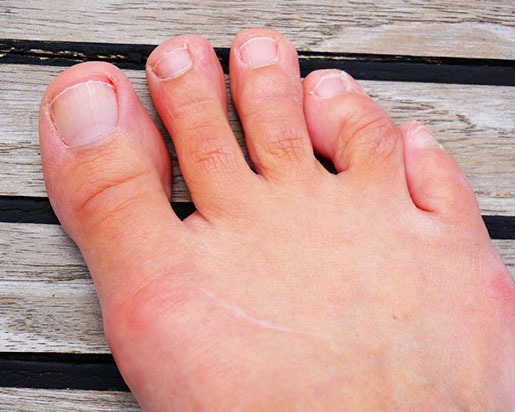
Hammertoe is a deformity of the second, third, or fourth toes. In this condition, the toe is bent at the middle joint, causing it to resemble a hammer. Left untreated, hammertoes can become inflexible and require surgery. People with hammertoe may have corns or calluses on the top of the middle joint of the toe or on the tip of the toe. They may also feel pain in their toes or feet and have difficulty finding comfortable shoes.
Cause
The primary causes of hammertoe include improperly fitting shoes and muscle imbalance.
Treatment
Treatment for the condition typically involves wearing shoes with soft, roomy toe boxes and toe exercises to stretch and strengthen the muscles. Commercially available straps, cushions, or nonmedicated corn pads may also relieve symptoms.
In severe cases, hammertoe surgery may be recommended to correct the deformity.
Hammertoes are a structural foot deformity where one or more of the smaller toes bend abnormally at the middle joint, taking on a curved, claw-like position. This condition develops gradually, most often due to muscle imbalance, prolonged pressure from narrow footwear, or an inherited foot structure.
When not addressed in the early stages, the toe joint can stiffen over time, making routine movement increasingly difficult. Recognizing this condition early and pursuing appropriate foot treatment can help preserve both comfort and mobility for years ahead.
Recognizing Appearance, Symptoms, and Prevention of Hammertoes
The appearance of hammertoes is easy to identify. The affected toe bends downward at the middle joint instead of lying flat, and the deformity may worsen progressively if the underlying cause is not managed. Alongside the visible change in toe shape, people commonly experience:
- Persistent pain or pressure when wearing shoes
- Corns or calluses forming on the top of the bent joint
- Stiffness or reduced range of motion in the toe
- Swelling and irritation around the affected area
Preventing this condition often starts with choosing well-fitted, supportive footwear that does not crowd the toes. Regular toe-stretching exercises and avoiding prolonged wear of high-heeled shoes also help reduce strain on the toe joints. Awareness of these foot health issues at an early stage puts you in a stronger position to avoid more complex care later.
Personalized Hammertoe Care That Matches Your Lifestyle and Goals
At First Coast Foot & Ankle Clinic, hammertoe treatment is approached with both precision and patient comfort in mind. After a thorough evaluation of the toe's position, flexibility, and the degree of discomfort involved, a personalized care plan is developed to match your specific needs and activity level.
Depending on the stage of the condition, treatment options may include:
- Padded shoe inserts or custom orthotics to reposition and offload pressure from the affected toe
- Toe splints or straps to gently guide the joint back toward proper alignment
- Physical therapy exercises are designed to strengthen and stretch the surrounding muscles
- Footwear recommendations suited to your foot structure
- Minimally invasive surgical correction for rigid or advanced cases that have not responded to conservative care
The goal in every case is genuine hammertoes pain relief alongside restored function so that patients can return to their regular routines without limitation.
Why Jacksonville Patients Trust Our Podiatrist
Living in Jacksonville, FL, means staying active, and foot conditions should never be a barrier to that lifestyle. Led by board-certified podiatrist Dr. Vimal Reddy, the team at First Coast Foot & Ankle Clinic brings decades of specialized experience to every patient visit. As a trusted foot doctor in the area, Dr. Reddy takes the time to understand each patient's history, daily demands, and treatment preferences before recommending any course of action.
Whether your hammertoes are in the early stages or have been causing significant discomfort for some time, the right care is available close to home.
Take the First Step Toward Hammertoes Pain Relief
Foot pain does not have to be part of your daily routine. Call us today at (904) 739-9129 or request an appointment online to speak with a podiatrist who will help you find real, lasting relief.