
Flat feet are a common condition of the foot structure. In infants and toddlers, prior to walking, the longitudinal arch is not developed and flat feet are normal. Most feet are flexible and an arch appears when children begin standing on their toes. The arch continues to develop throughout childhood, and by adulthood most people have developed normal arches.
Symptoms
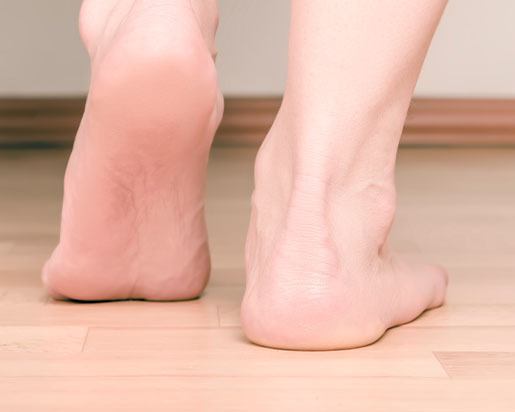
Flat feet are generally associated with pronation, a leaning inward of the ankle bones toward the center line. Shoes of children who pronate, when placed side by side, will lean toward each other (after they have been worn long enough for the foot position to remodel their shape).
Many people with flat feet do not experience pain or other problems. When pain in the foot, ankle, or lower leg does occur, especially in children, the feet should be evaluated.
Tibialis Posterior Tendonitis
Painful progressive flatfoot, otherwise known as tibialis posterior tendonitis or adult-acquired flatfoot, refers to inflammation of the tendon of the tibialis posterior. This condition arises when the tendon becomes inflamed, stretched, or torn. Left untreated, it may lead to severe disability and chronic pain. People are predisposed to tibialis posterior tendonitis if they have flat feet or an abnormal attachment of the tendon to the bones in the midfoot.
Treatment
Nonsteroidal anti-inflammatory medications, icing, physical therapy, supportive taping, bracing, and orthotics are common treatments for painful progressive flatfoot. Note: Please consult your physician before taking any medications. In some cases, a surgery may need to be performed to repair a torn or damaged tendon and restore normal function. In the most severe cases, surgery on the midfoot bones may be necessary to treat the associated flatfoot condition.
Flat feet are one of the most common structural foot conditions affecting people of all ages. The arch either fails to develop fully or gradually flattens over time, resulting in the entire sole making near-full contact with the ground.
While some people live comfortably with flat feet, others experience persistent pain in the heel, arch, or ankle. When the condition starts to limit daily movement, flat foot treatment becomes a necessary step toward lasting comfort.
In Jacksonville, FL, access to qualified podiatric care makes managing this condition more approachable than ever.
How to Spot Flat Feet Before They Become a Bigger Problem
Understanding the appearance, symptoms, and prevention of flat feet can make a meaningful difference in protecting long-term foot health. A visibly absent arch, inward rolling of the ankles, and uneven shoe wear are among the earliest signs.
Common symptoms include aching along the inner foot, swollen arches, calf tightness, and fatigue after standing for extended periods. Wearing supportive footwear, performing regular calf stretches, and scheduling an early evaluation with a foot doctor are practical steps to prevent flat feet from progressing into more serious foot health issues.
How Flat Feet Connect to Your Overall Health
Flat feet and foot health have a close relationship that often extends beyond the foot itself. When the arch collapses, the body's alignment shifts, placing added stress on the ankles, knees, hips, and lower back. Over time, everyday activities like walking and standing can feel increasingly uncomfortable.
Adults who develop tibialis posterior tendonitis, a condition closely linked to progressive flatfoot, often report worsening pain that limits their ability to stay active. Addressing the problem early through proper foot treatment can prevent these complications from becoming chronic.
Signs That It's Time to See a Podiatrist
Not every flat foot causes problems, but the following signs are worth taking seriously:
- Persistent pain along the inner ankle or arch
- Noticeable inward tilting of the ankles when standing
- Heel or lower leg discomfort that does not improve with rest
- Shoes wearing down unevenly on one side
- Swelling along the inner side of the foot
- Difficulty standing or walking for longer periods
If any of these apply to you, a podiatrist can assess your foot structure and recommend the most effective path forward.
Personalized Flat Feet Treatment From Evaluation to Relief
At First Coast Foot & Ankle Clinic, we evaluate each patient's foot structure, symptoms, and daily activity level before recommending a care plan. Treatment options for flat feet include:
- Anti-inflammatory medications to manage swelling and pain (please consult your physician before use)
- Physical therapy with targeted stretching and strengthening exercises
- Supportive taping and bracing to stabilize the ankle and arch
- Orthotics for flat feet, custom-designed to redistribute pressure and restore proper alignment
- Surgical repair for severe tendon damage or bone-related flatfoot deformity in advanced cases
Orthotics for flat feet remain one of the most effective nonsurgical solutions available, delivering reliable flat foot pain relief while supporting natural movement throughout the day.
Board-Certified Podiatric Care You Can Count On
At First Coast Foot & Ankle Clinic, we believe healthy feet are the foundation of a happy, active life. Led by Dr. Vimal A. Reddy, D.P.M., our team brings board-certified expertise, advanced techniques, and genuine patient-centered care to every visit. We take the time to walk patients through their condition and all available treatment options so they feel confident in every decision about their health.
If flat foot pain relief is what you are looking for, our team is ready to help you move forward. Call us at 904-739-9129 or request your appointment online today.